(From International Policy Digest)
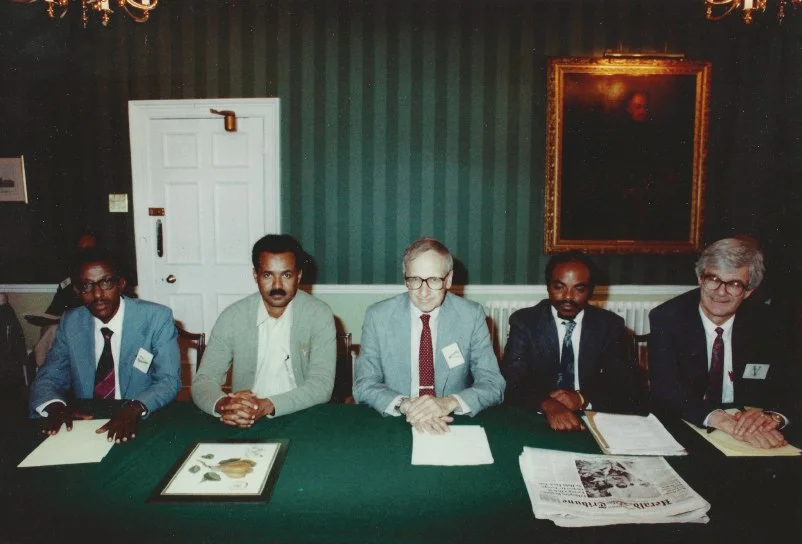
Last week marked the 25th anniversary, or “Silver Jubilee,” since the East Africa nation Eritrea gained independence from Ethiopia in a conflict that lasted three decades. Ambassador Cohen worked closely with leaders of both nations and in 1991 brokered a peace accord that was to establish a framework for future mutual progress. International Policy Digest interviewed Amb. Cohen to learn his thoughts and insights on Eritrea’s recent history and path forward.
Read MoreHissène Habré, the President of the Republic of Chad from 1982 to 1990, has been convicted of crimes against humanity by a special tribunal in the Republic of Senegal. He has been sentenced to life in prison. The punishment is well deserved. He could have been a hero to his fellow Africans for standing up to the bullying of dictator Moamar Gaddafi in neighboring Libya. But he was totally blood thirsty, murdering as many as 40,000 political opposition and ordinary citizens merely because they belonged to ethnic groups that he considered treasonous or dangerous.
The trial and conviction in an African court of a former African head of state for crimes against humanity, may have set an interesting precedent for the international criminal courts system. African leaders and intellectuals have complained that the International Criminal Court (ICC) in The Hague appears to be concentrating almost exclusively on African suspects. They appear to be ignoring criminal perpetrators who are hiding in plain sight in Latin America and Asia. The current President of Sudan is under indictment by the ICC, but he travels freely in African countries that refuse to do their international duty and extradite him to The Hague. The Hissène Habré convinction in Senegal may mark the beginning of the end of the ICC’s jurisdiction in Africa.
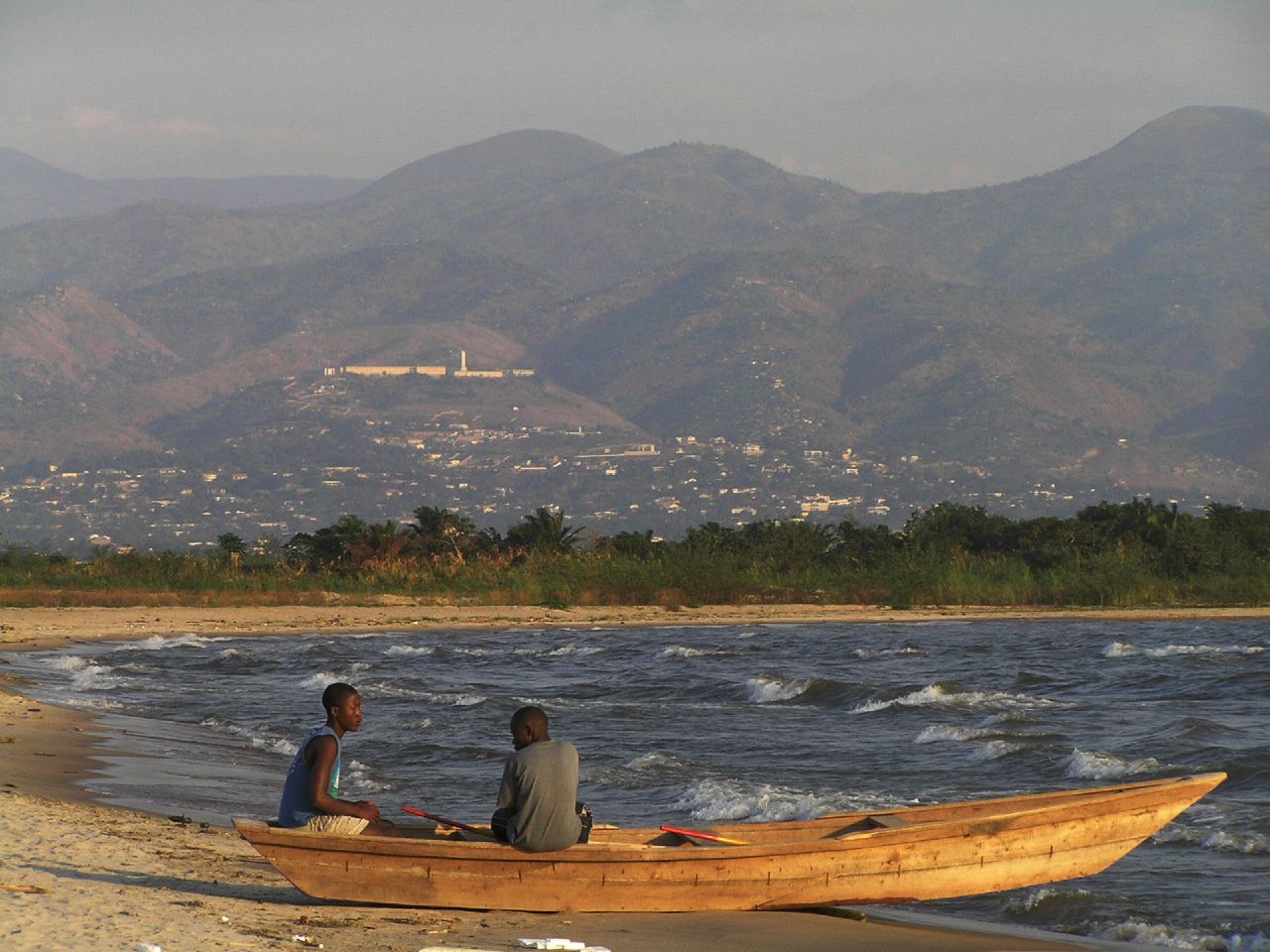
Read MoreThousands of people killed in just the last year. Over a quarter of a million refugees fleeing to neighboring countries. The violent internal conflict in the Republic of Burundi in Central Africa is tragically nowhere near an end. The violence started in 2015 when President Nkurunziza was able to find a “loophole” in the constitution that enabled him to run for a third term despite the constitutional limit of two terms for all elected presidents in Burundi. Nkurunziza’s election to a third term in 2015 triggered the start of violent opposition that continues today with no end in sight.
On May 2, 2016, the U.S. State Department through spokesman John Kirby called on the conflicting parties in Burundi to resume dialogue and to find a solution within the framework envisaged by the Arusha Accords of August, 2000. The State Department’s search for a political accommodation to this primarily ethnic-based conflict is unrealistic.
Read MoreJean-Pierre Bemba is the head of an important political family in the Democratic Republic of the Congo. His political base is in the northwestern province of Equateur. His late father was a leading business entrepreneur during the administration of President Mobutu Sese Seko (1965-1996). He founded the Movement for the Liberation of the Congo (MLC) which began as a rebel group and evolved into a major political party.
During the interim period between the end of the great civil war in 2002 and the first democratic election in 2006, Bemba was one of four transitional vice presidents responsible for governing the country under President Joseph Kabila. He was an unsuccessful candidate for president in the elections of 2006 and 2011. The 2011 election was won by incumbent President Kabila under conditions that the international community considered deeply flawed. A number of observers expressed the view that the real winner in 2011 was Jean-Pierre Bemba.
Read MoreThe political environment in the Democratic Republic of the Congo is becoming increasingly tense and dangerous as the deadline for the November 2016 presidential election approaches.
The DRC constitution stipulates that a President can be elected a maximum of two times to serve two terms. The constitution also states that the two-term limit on presidential mandates cannot be amended by parliament. To change this article of the constitution, a new constitution would have to be written, and confirmed by the people in a referendum.
Read MoreThere are some intriguing new developments in the Red Sea region.
Eritrea has joined the “Islamic Coalition Against Terrorism.” What is so interesting about that? Well, the list of countries in that coalition are all good friends of the United States. American arms exporters make lots of dinars selling to those friends.
So what does all this have to do with Eritrea? Well, can one say that the friend of my friend should also be my friend? Unfortunately, Eritrea and the US still do not call themselves friends. So, what is going on?
Read MoreFor many African nations, the year 2016 is presenting some difficult challenges. For the second time since 1960, the commodity exports that bring in most of Africa’s revenue have suffered severe world price declines.
Between 1960 and 1980, high world prices for African commodity exports, especially crude oil, minerals such as copper, iron ore, manganese, and cobalt, brought African governments considerable revenue. Unfortunately, that revenue was not used to finance economic diversity, especially in agro-industry, manufacturing, transportation and intra-African trade. As a result, when world commodity prices dropped heavily between 1975 and 1980, many African countries found themselves heavily in debt and unable to service those debts. Too much of the earlier wealth was squandered on the financing of white elephants, the disastrous nationalization of private companies, and sadly, extensive corruption.
Read MoreHey, all you Abyssinians out there. While you are wasting time squabbling with each other and not talking to each other, the governments of the Arabian Peninsula are eating your lunch.
Have you noticed that warships from the United Arab Emirates are operating out of the port of Asab 24/7? Their interest is in Yemen, not in Eritrea or Ethiopia. There are reports that Saudi Arabia has taken a 50-year lease on Asab. If that is true, the next step will be Sharia Law in the Horn of Africa big time.
I think it is time for Abyssinians to take back control of the west bank of the Red Sea before it is too late.
One way to accomplish this is for Eritrea and Ethiopia to finally end the war of 1998-2000 and normalize relations. It can be done as a win-win.
Read MoreThe political leaders of the Ethiopian Government have a policy of killing all opponents who take to the streets to demonstrate against them. Other opponents who do not demonstrate but make public statements instead, are sent to jail for long periods.
I fail to understand why the Ethiopian regime feels it necessary to exercise such extreme control to the point of committing murder periodically against their own citizens. The government is receiving good marks from the international community for its investments in infrastructure and agriculture. If it could relax and loosen up its controls, it could become popular.
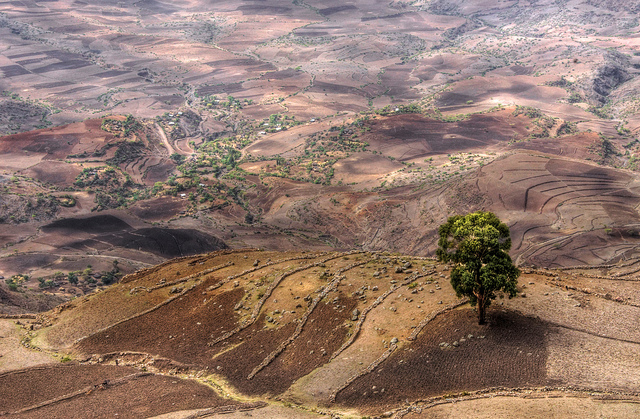
Read MoreAccording to press reports, Ethiopia is currently going through a very severe drought, and is in dire need of international food assistance to make up for failed crops.
Ethiopia has a history of famine situations due to drought. During every drought year, the international community has been supportive with shipments of food relief. Since the year 2002, Ethiopia has been coping nicely with dry weather. The construction of new roads has allowed the movement of food crops from wet regions to dry regions, thereby making it unnecessary to call for international aid. In view of the improved transportation situation, the fact that food aid is needed in the year 2015 indicates that the drought situation must be truly severe. In short, the entire country must be having a rain deficit and not just certain regions as in the past.
Read MoreThe United States is warning African leaders not to change their constitutions to eliminate two-term limits for heads of state. It is not apparent that they are taking the warnings seriously.
Many African heads of state are subject to constitutional two-term limits, similar to the situation in the United States. As they approach the end of their mandates, a number of leaders want to change their national constitutions to eliminate the two-term limit so that they can continue to run for election and remain in power indefinitely.
Read More