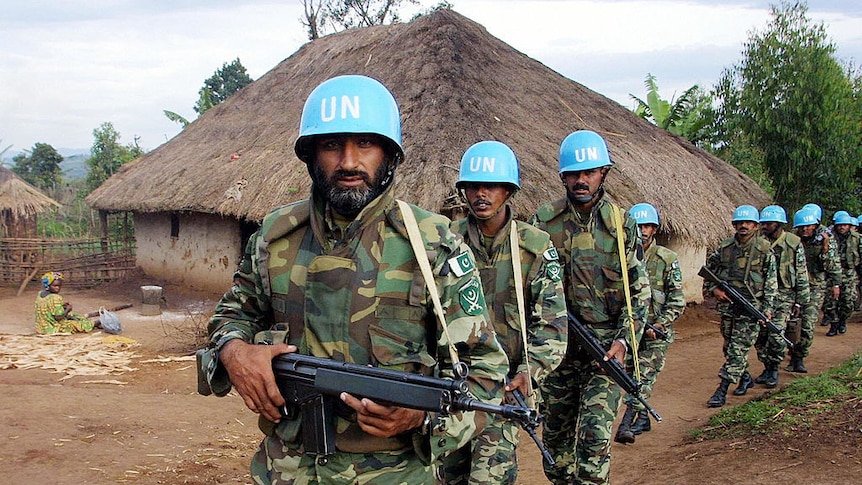
Washington Jewish Week: History Teaches Us Better to Welcome Than to Turn Away Those Who Seek Refuge

A lesson from the tragedy of death, deportation and raids in Minneapolis and around the country should be clear to all — especially to those in America of Jewish heritage. After decades of watching governments around the world and now here at home single out entire communities in the claimed name of security, we should know that collective blame produces instability, not safety. When an entire people are spoken of or acted against in sweeping, negative terms, the fallout rarely stays abstract — and too often imperils lives and community trust.

For someone who has spent a lifetime in diplomacy — and whose own family history is marked by discrimination, displacement and worse — I know this kind of rhetoric can have dramatic and dark consequences.

As a Jew who grew up in Brooklyn during and after the Second World War, surrounded by families who had escaped pogroms and the Holocaust, I learned early what it means for a people to be uprooted and denied safe haven. My parents raised me with the enduring principle of pikuach nefesh — that saving a life is not only a mitzvah but also a responsibility that extends far beyond one’s own community. The Talmud teaches that “whoever saves one life is considered to have saved an entire world.” Our obligation is clear.

Those values guided me throughout more than four decades of service to the United States. They shaped my approach to diplomacy, and they inspired some of the work of which I remain most proud. In 1991, as assistant secretary of state for African affairs, I supported Operation Solomon, the extraordinary airlift that brought more than 14,000 Ethiopian Jews to safety in Israel in just 36 hours. Many of those families had walked for days or weeks, crossed borders under threat, lived in camps and waited for the world to recognize their plight. I will never forget the images of the relief on their faces as they boarded planes to a new life. It was a moment when the international community chose compassion over indifference — and lives were saved.

My years working in and on the Horn of Africa also gave me a deep understanding of why Somali families eventually sought refuge in the United States. Somalia’s collapse in the late 1980s and early 1990s was devastating. Armed militias, political repression and the breakdown of state institutions displaced millions. No one leaves home under such circumstances unless there is no other choice. Those who arrived in America did so seeking safety and stability, just as countless refugees — including my own ancestors — once did.

Today, by far the vast majority of Somali Americans contribute meaningfully to communities across the country, particularly in Minnesota. They are business owners, teachers, health care workers and public servants. Many are naturalized citizens. Their collective stories reflect resilience and civic commitment, not the negative portrayals that too often dominate public discourse. Individual violators of America’s laws should be prosecuted individually. An entire people should not be persecuted.

I’ve seen up close what Jewish memory also teaches — that societies can begin their slide toward injustice by defining outsiders as unwelcome or unworthy. We must remain attentive to moments when entire groups are characterized in broad, disparaging terms. Our nation is at its best when it evaluates individuals on their merits, rather than through the lens of stereotype or suspicion.

I cannot remain silent when those seeking refuge are spoken of in ways that undermine their lives and dignity. The United States has long upheld a rigorous, lawful refugee process rooted in values shared across many faiths. Discrimination against any group risks turning us away from those principles.

America’s strength has always rested on the diversity of its people — nearly all of whom, save Indigenous Americans, arrived as immigrants or are descendants of immigrants. We must not turn away those whose names sound unfamiliar, whose skin tone differs from our own, or whose prayers rise in another language. To do so would contradict the very traditions that have guided and enriched our nation.

May the torch of the Statue of Liberty continue to shine brightly for all who seek and have journeyed to our shores, just as the lights of Shabbat illuminate our homes with hope and welcome.

Herman J. Cohen served in the U.S. foreign service between 1955 and 1993 as ambassador and career ambassador, consular officer, assistant secretary of state for Africa and as special assistant to the president and senior director for Africa at the U.S. National Security Council.
How Did Africa Fare in 2025? A Test of U.S. Policy Choices

For generations, American candidates have asked voters a familiar question: Are you better off now than you were four years ago?

For Africa, the more urgent question at the end of 2025 is sharper — and inseparable from U.S. foreign policy: Are you better off than you were a year ago, after Washington dramatically changed how it engages the continent?

This year marked one of the most abrupt shifts in U.S.–Africa policy in decades. Longstanding humanitarian and health programs were ended or frozen. Development assistance was curtailed or put on hold. Trade policy was elevated, but often without the diplomatic or development tools that once supported it. Security cooperation continued — and in some cases intensified — even as civilian protection and diplomatic engagement receded.

For millions of Africans, the consequences were immediate.

More than 239 million people across Africa now require urgent humanitarian assistance and protection, according to the United Nations Office for the Coordination of Humanitarian Affairs. Conflicts are growing longer and more violent toward civilians, climate shocks are intensifying, and displacement continues to rise. Sudan alone accounts for roughly 10 percent of all people in need worldwide. Across West Africa, violence, political instability and environmental disasters are forcing families from their homes and eroding already fragile economies.

U.S. policy changes amplified these pressures. The administration sharply reduced or shuttered USAID programming across multiple sectors. Billions of dollars in humanitarian assistance were ended or left in limbo. Food security and climate resilience programs were paused. The President’s Emergency Plan for AIDS Relief (PEPFAR) — which since 2003 had saved more than 25 million lives — was effectively abandoned.

At the same time, Washington pursued a “trade, not aid” approach, while imposing shifting tariff policies that disrupted supply chains and investment planning. Diplomatic staffing was thinned. Development tools were sidelined faster than private-sector alternatives could realistically replace them. That diplomatic pullback became more explicit late in the year, when President Trump ordered the recall of multiple U.S. ambassadors from African posts, further reducing America’s on-the-ground presence and weakening already strained channels of political engagement.

The human cost was real. Reuters reported this fall on a nine-month-old baby in northern Cameroon who died of malaria after arriving at a health center with no remaining U.S.-funded diagnostics or life-saving drugs. Until recently, American-backed community health workers routinely reached remote villages across the region. That safety net has now largely disappeared.

Compounding these effects, the administration imposed new U.S. travel restrictions on several African countries, citing security and migration concerns. The bans disrupted business travel, educational exchanges and family ties, and sent a broader signal of disengagement at a moment when African governments were seeking greater — not fewer — connections with Washington.

America’s pullback weakened U.S. influence across Africa and created openings for China and Russia to deepen their own political, economic and security ties.

Yet 2025 was not a story of unbroken decline.

Some U.S. engagement continued — and in a few areas expanded. Security cooperation remained robust. Military restrictions were loosened, and U.S. airstrikes in Somalia accelerated to a record pace, reportedly exceeding even U.S. counter-narcotics operations in the Western Hemisphere. Diplomatically, the administration brokered cease-fire agreements between the Democratic Republic of the Congo and Rwanda, ending months of direct hostilities, though their durability remains uncertain. African regional organizations also assumed greater leadership in peacekeeping and mediation.

Notably, after months of uncertainty, Washington also concluded a series of targeted health agreements with several African governments, aimed at sustaining cooperation on disease surveillance, vaccine access and pandemic preparedness. While far narrower than past U.S. health initiatives, these deals acknowledged the limits of a full withdrawal and underscored that even a scaled-back approach cannot entirely replace the role the United States has long played in safeguarding public health across the continent.

Economically, Africa showed resilience. The continent’s economy is expected to have grown by nearly 4 percent in 2025, outpacing global averages despite geopolitical uncertainty and trade tensions. Inflation eased across much of sub-Saharan Africa and is projected to continue moderating in 2026. Digital innovation accelerated, particularly in fintech and mobile money. Technology hubs expanded, transportation projects advanced and venture capital cautiously returned. African investors increasingly put capital to work at home.

U.S. and European firms expanded their presence in sectors ranging from technology to critical minerals. In Washington, support for extending the African Growth and Opportunity Act—which for a quarter century anchored mutually beneficial trade—has now advanced significantly: the U.S. House of Representatives recently approved a three-year extension of AGOA through 2028, a strong signal that trade with Africa still commands bipartisan support on Capitol Hill. While the bill now goes to the Senate for final approval, tariffs on African exports—once feared to rise sharply—now appear likely to remain manageable, sustaining an important foundation for U.S.–Africa commercial engagement.

After nearly four decades as a U.S. Foreign Service officer, I remain a professional optimist. Africa’s challenges are real — and in some cases severe — but they should spur smarter engagement, not retreat. Diplomacy, development and security cooperation have long worked best together. Removing one leg of that stool weakens the others.

Is Africa better off today than it was a year ago? For millions facing hunger, displacement and preventable disease, the answer is clearly no. But economic momentum, regional diplomacy and private investment offer reasons for cautious hope.

As 2026 approaches, the more important question is whether the United States recalibrates its Africa policy — restoring life-saving programs, stabilizing trade policy and re-investing diplomatically — or continues down a narrower path. A safer, healthier and more prosperous Africa is not charity. It is a strategic investment the United States can still choose to make.

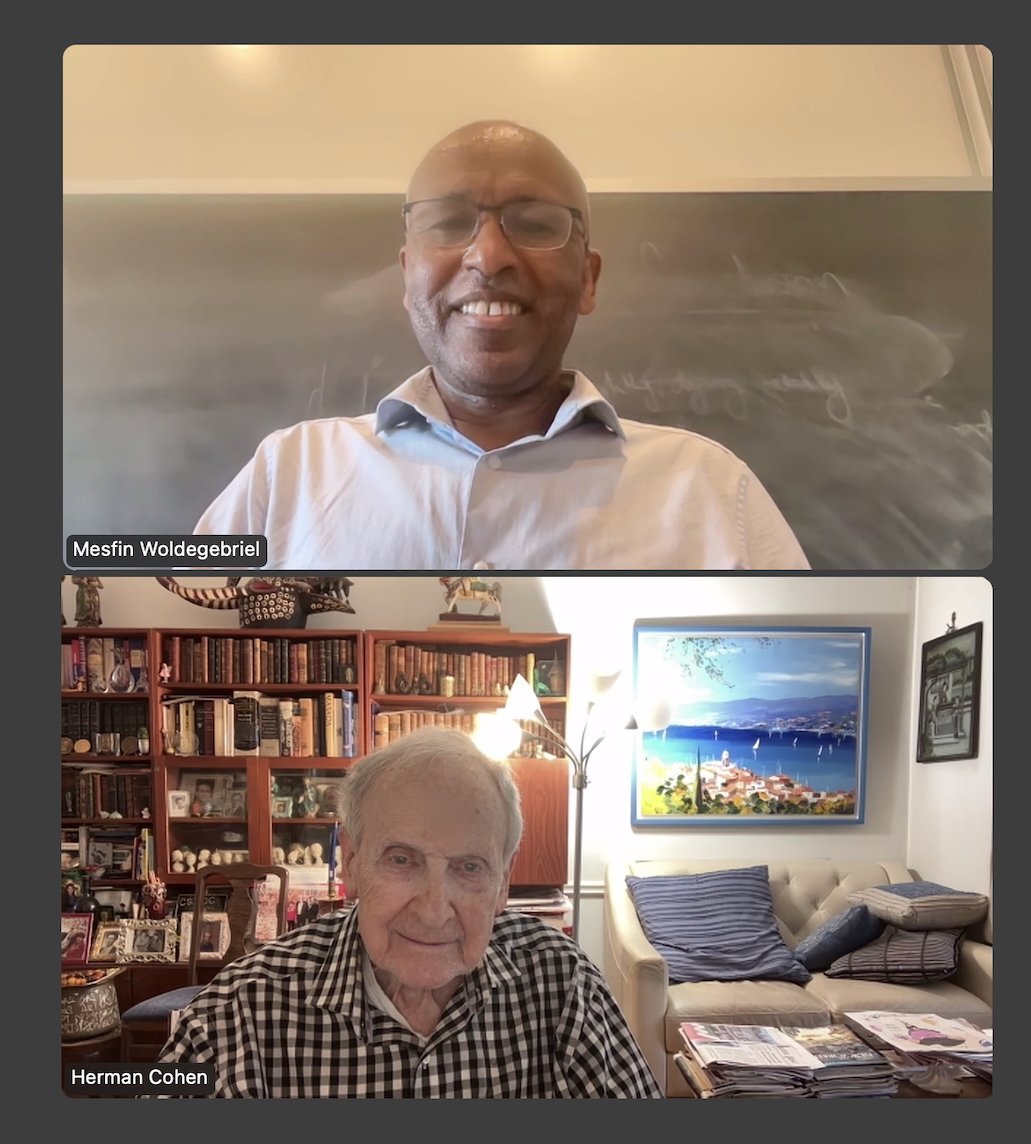
Speaking to Boston College

The future of Africa-US diplomacy and policy ​in good hands, as I saw when I again had the honor of talking with Boston College students and their "Politics of Development in Africa" class led by professor Mesfin Woldegebriel. Great questions on challenges to the transformation of African economies, the impact of leadership decisions, how external influences are evolving in Africa, and a look at future strategies for sustainable development. Thank you for your time - and your commitment.

2025 Foreword: Africa, You Have a Friend in Washington

Africa has always held my attention—not as a monolith, but as a mosaic of nations, cultures and aspirations. Over the course of my nearly 40-year career in the U.S. Foreign Service, I had the privilege of witnessing history unfold across the continent. I stood with new nations as they took their first steps into independence. I saw, firsthand, the resilience of the African people.

When I wrote Africa, You Have a Friend in Washington, my intent was to preserve a record of those years and offer a behind-the-scenes look at how diplomacy shaped Africa’s relationship with the United States during the latter half of the 20th century. The memories and personal interactions I recount here remind me to this day of a basic tenet of my life: Experience matters. Compassion counts. People can and do make a difference. History is never static, and the story of Africa is far from over. We are witnessing a dynamic continent that continues to evolve, challenge expectations, and redefine its role in the world.

Africa has always been a continent of motion. From Kampala to Kinshasa, Lusaka to Dakar, I witnessed constant change. That movement—at times chaotic, often transformative—is not new. It has deep historical roots. In my diplomatic service, I encountered the earliest stirrings of postcolonial governance and the fragile emergence of national institutions. What I see today is a continuation of that journey: African nations asserting themselves in global forums, not as junior partners, but as architects of their own destinies.

The diplomatic patterns have changed. Where once Cold War dynamics loomed large, now Africa navigates a multipolar world. China, India, the Gulf states, and others have joined Russia and Europe in forging new relationships on the continent even as long-term U.S. relationships and policies toward Africa take new turns. These are not just the partnerships of yesterday, based on aid and dependency, but increasingly rooted in trade, technology and shared strategic interests. The continent’s diplomatic sophistication has grown, shaped by decades of experience and the agency of African leaders who have become adept at balancing national interests in a complex global environment.

This same spirit of transformation is most visible in the continent’s economic landscape. When I began my work in Africa, economic development was a central concern—and a persistent challenge. We supported newly independent nations through aid, trade partnerships and technical assistance. At the time, few could have foreseen the kind of innovation-driven growth we see today.

Africa’s economic renaissance is powered by its own people—by African traders, manufacturers, exporters, and business leaders who are driving commerce within the continent and beyond. From the bustling ports of Durban and Mombasa to trade corridors stretching from Lagos to Abidjan and along the burgeoning Lobito port rail corridor from Angola to the Democratic Republic of Congo, Africa is deepening its role in global supply chains. The African Continental Free Trade Area (AfCFTA), now underway, promises to boost intra-African trade and reduce barriers that have long limited the continent’s full economic potential.

Entrepreneurs are expanding export businesses in everything from coffee, cocoa and cut flowers to textiles, processed foods and manufactured goods. African agribusinesses are finding new markets in Europe, Asia and the Middle East, while importers are meeting rising consumer demand for goods ranging from electronics to construction materials. These enterprises, whether family-managed or industrial-scale, are increasingly integrated into global commerce. And I’m encouraged to see that African nations and business leaders are investing in new resources to process raw materials like manganese, cobalt, and coltan at home, and that they are at least looking for ways to keep wealth from the continent on the continent.

This shift is not merely transactional—it is a transformation of how Africa participates in the world economy. Where once raw materials dominated the continent’s export profile, we now see diversification, increased value, and a growing class of business leaders shaping their countries’ futures. These changes mark a sharp departure from the economic constraints I witnessed in the early post-independence years. They speak of a continent poised not just for growth, but for ever-greater influence.

Still, with progress come setbacks and challenges. The road to good governance is not linear. In my time, I encountered everything from hopeful reformers to presidents-for-life. I saw both the fragility of state institutions and the strength of civil society. That duality remains. But what gives me hope is the emergence of a new generation of Africans who are more politically engaged than ever—young people demanding accountability, transparency, and a voice in shaping their future.

Movements for democratic reform are gaining ground in many corners of the continent, even as others face backsliding and repression. The path is uneven, but the arc continues to bend toward participation and pluralism. These efforts are not occurring in isolation; they are the result of decades of civic activism, international partnership, and a growing belief in the value of representative governance. The United States, in its diplomatic history and ongoing commitments, has played a role in supporting these developments. I am proud to have been part of that effort and am eager to see what the months and years ahead will bring in US/Africa relations and policies.

Security, of course, remains a pressing issue. Conflicts such as those between the Democratic Republic of the Congo and Rwanda, or the ongoing civil war in Sudan, are tragic reminders of unresolved grievances and fragile statehood. But here too, I’ve seen evolution. African-led peacekeeping efforts—through the African Union, ECOWAS and other regional bodies—are increasingly central to the continent’s conflict resolution strategies. Unlike in decades past, where outside powers routinely dictated the terms of peace, African voices now more frequently lead those discussions.

In my own experience, diplomacy often required patience, trust-building, local knowledge – and, as I hope you’ll see in these pages, a good sense of humor. Whether assisting peace talks in Angola or negotiating sensitive political transitions, I saw that lasting solutions should be rooted in the agency of local actors. That is why today’s intra-Africa responses—however imperfect—represent real progress. They suggest a growing capacity not only to manage conflict but to envision and implement peace. And they generate a whole new series of anecdotes to be told.

The historical snapshots within this book—of political transitions, economic policy debates and the forging of diplomacy—are more than just memories; they are the foundation for understanding Africa’s present and anticipating its future. As I reflect on my decades in the Foreign Service and the countless relationships I built across the continent, I remain profoundly hopeful. At its core, Africa, You Have a Friend in Washington is a reflection of enduring, if sometimes imperfect, partnerships that have grown out of mutual respect and shared history.

For those of you about to read the memoir in its original language, as I recall in Chapter 1, “One of the basic requirements for tenure in the U.S. Foreign Service is fluency in a foreign language. I had studied French in high school and college. To find my level, I took the State Department French examination. On a scale of 1 to 5, the passing grade is 3. My score was 2.”

My first assignment was nonetheless to the American Embassy in Paris; I had a year to make the grade. It didn’t hurt that the woman I met in France – and later married – was fluent in both languages. “When I was growing up,” I write in the epilogue, “I heard several languages spoken at home along with English.” An early lesson for a career diplomat: be respectful. And so, with the utmost respect, dear reader and apologies, thank you for sticking with me in my native written language, even as I welcome an engaging conversation in yours!

I hope you’ll see in these stories evidence of how diplomacy, when encouraged and allowed to be conducted with humility and purpose, can bridge continents and create lasting bonds.

The journey ahead will not be straight ahead or easy. But the past, as recalled in these pages, sheds light not just on a fascinating past but also serves as a lens through which to view an inspiring future, still being written by – and for - the people of Africa.

Africa, you still have a friend in Washington,

Amb. Herman J. Cohen

June 2025

Washington, D.C.

Speaking at Boston College with Professor Mesfin Woldegebriel

It was a pleasure to join Professor Mesfin Woldegebriel and his class at Boston College. We discussed a wide range of topics including opportunities for economic development and investment in Africa, historic peace negotiations in Angola, Ethiopia, and Mozambique, and the rising conflict between Rwanda and the Democratic Republic of the Congo. The continent's - and America's - future will be in good hands as those students move on  to careers in diplomacy and foreign policy.

Article: Operation Solomon and a Passover Reminder to Serve Others and Repair the World

ACNSL National Security Book Award Event

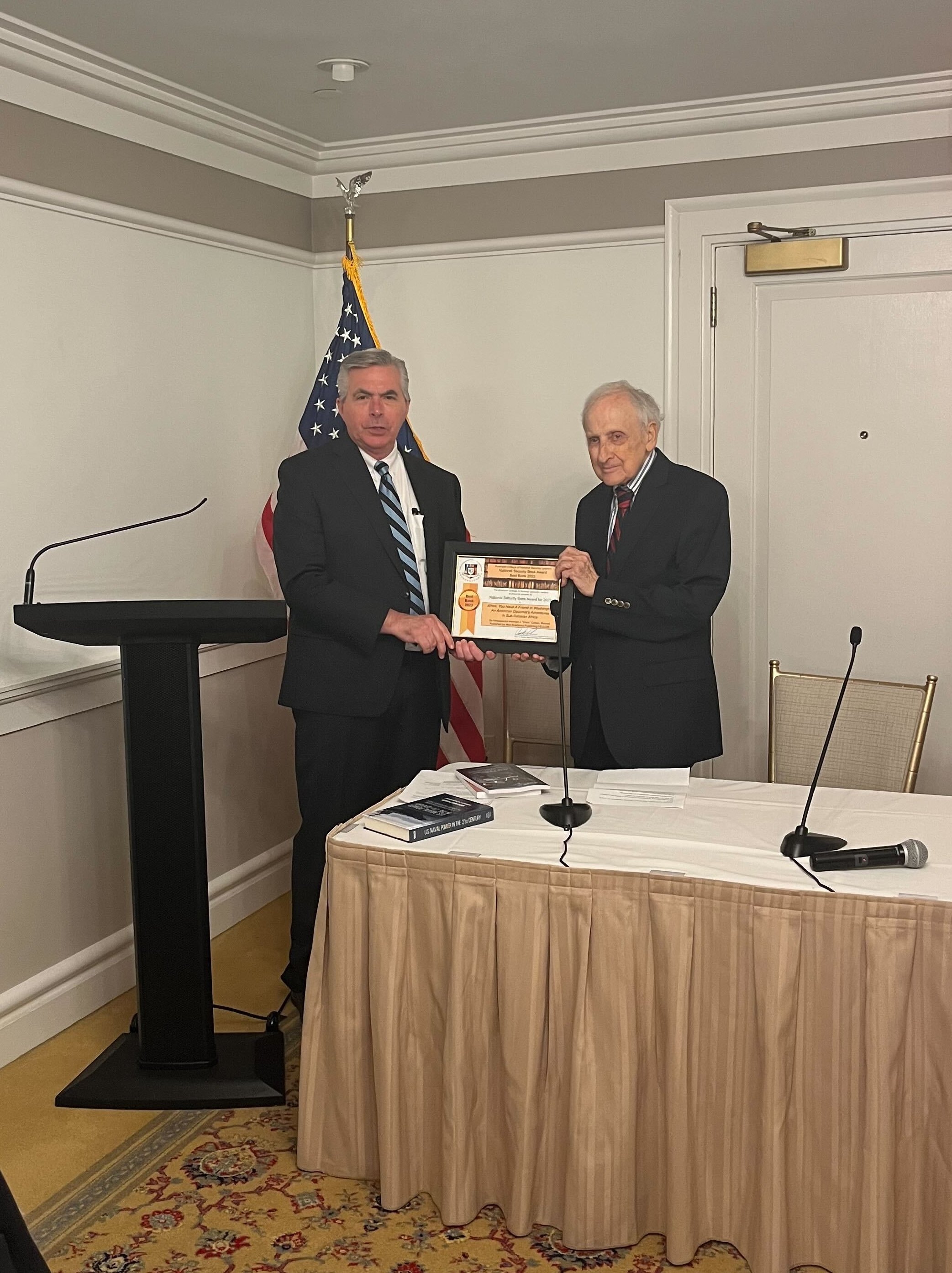
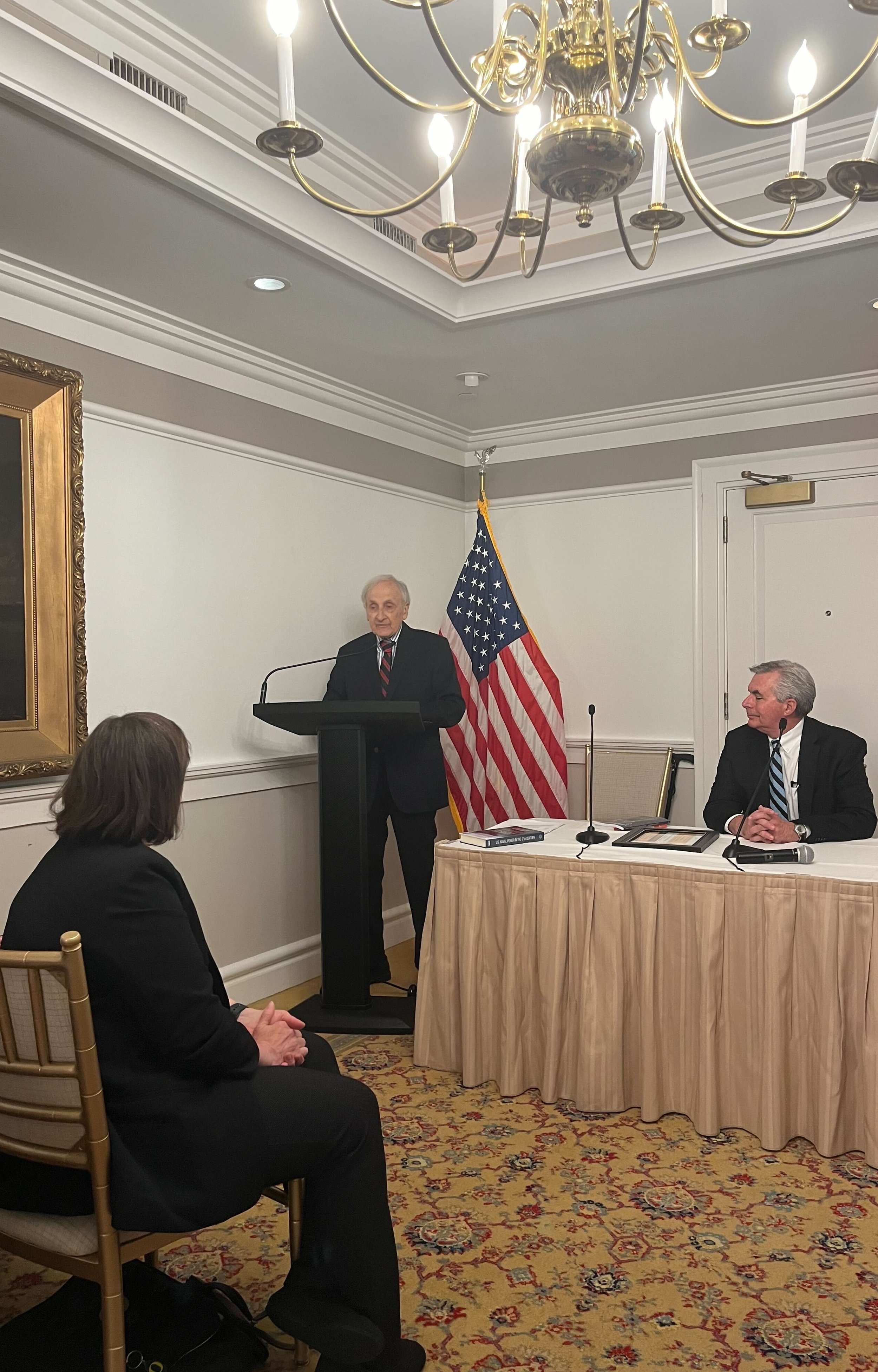
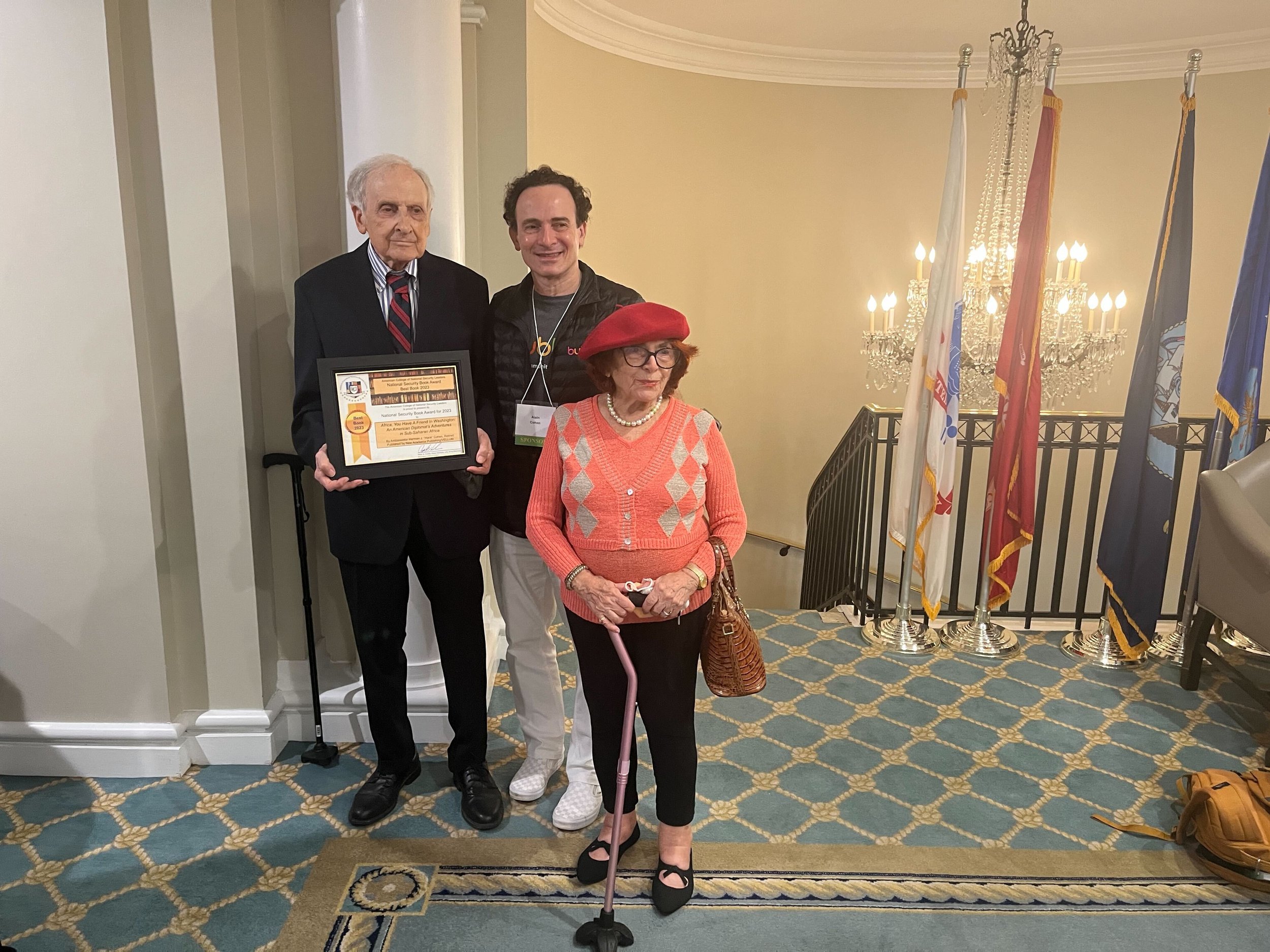
My thanks and deep appreciation to the board of ACNSL for selecting my book for “Best Book on Security for 2023.” This award has special significance for two reasons. First, the ACNSL Board is made up of generals, admirals, and senior defense officials. So, the award for security is truly meaningful. Secondly, the book is a memoir about my career. In effect, the award recognizes the element of security in my career as a specialist in US-African relations. During the period 1989-1993, the Bureau of African Affairs, under my leadership, ended three African civil wars in Angola, Mozambique, and Ethiopia. I am very proud to receive this award and grateful for the support of my family throughout my career.